
Concrete Garage Floors Victoria BC
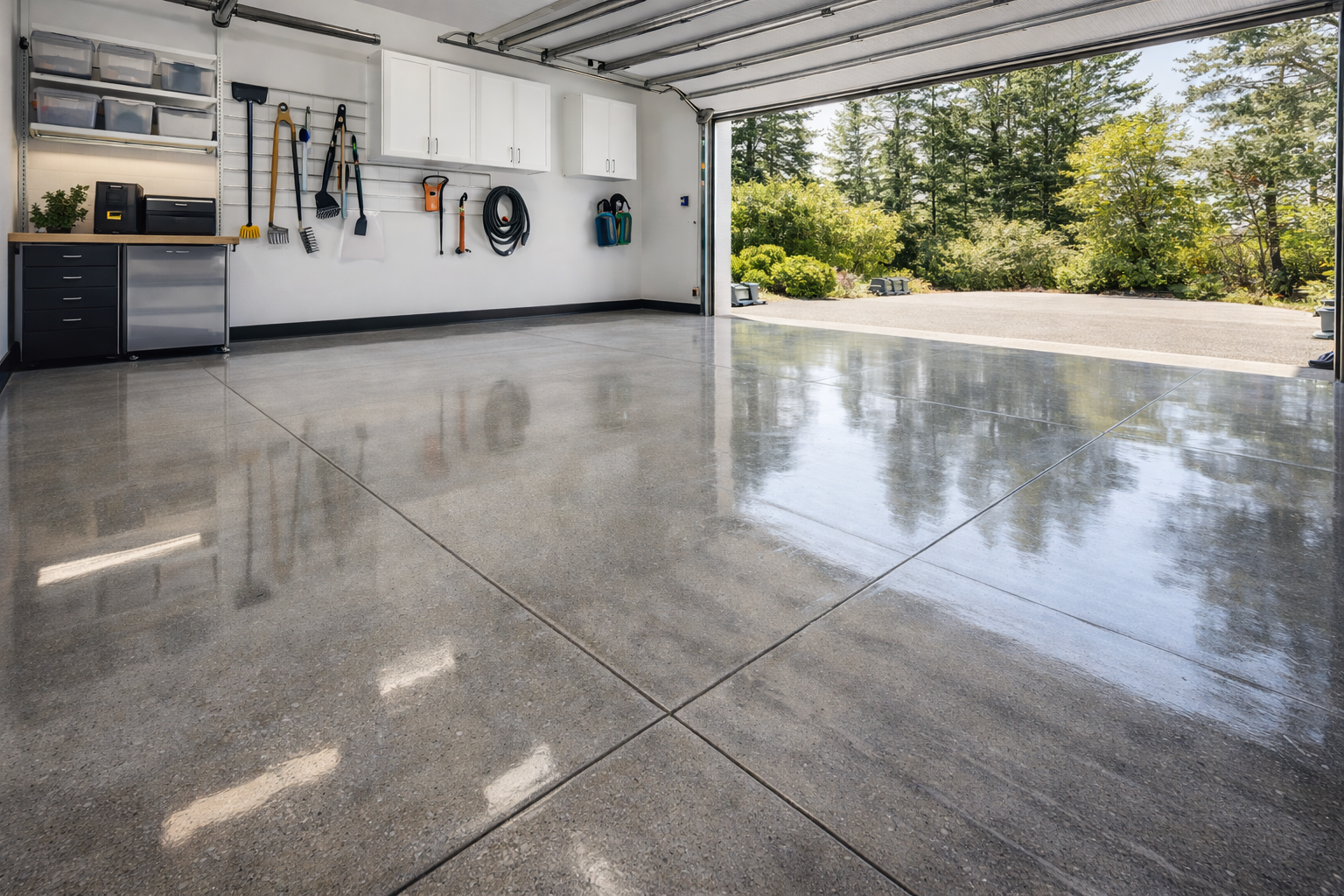
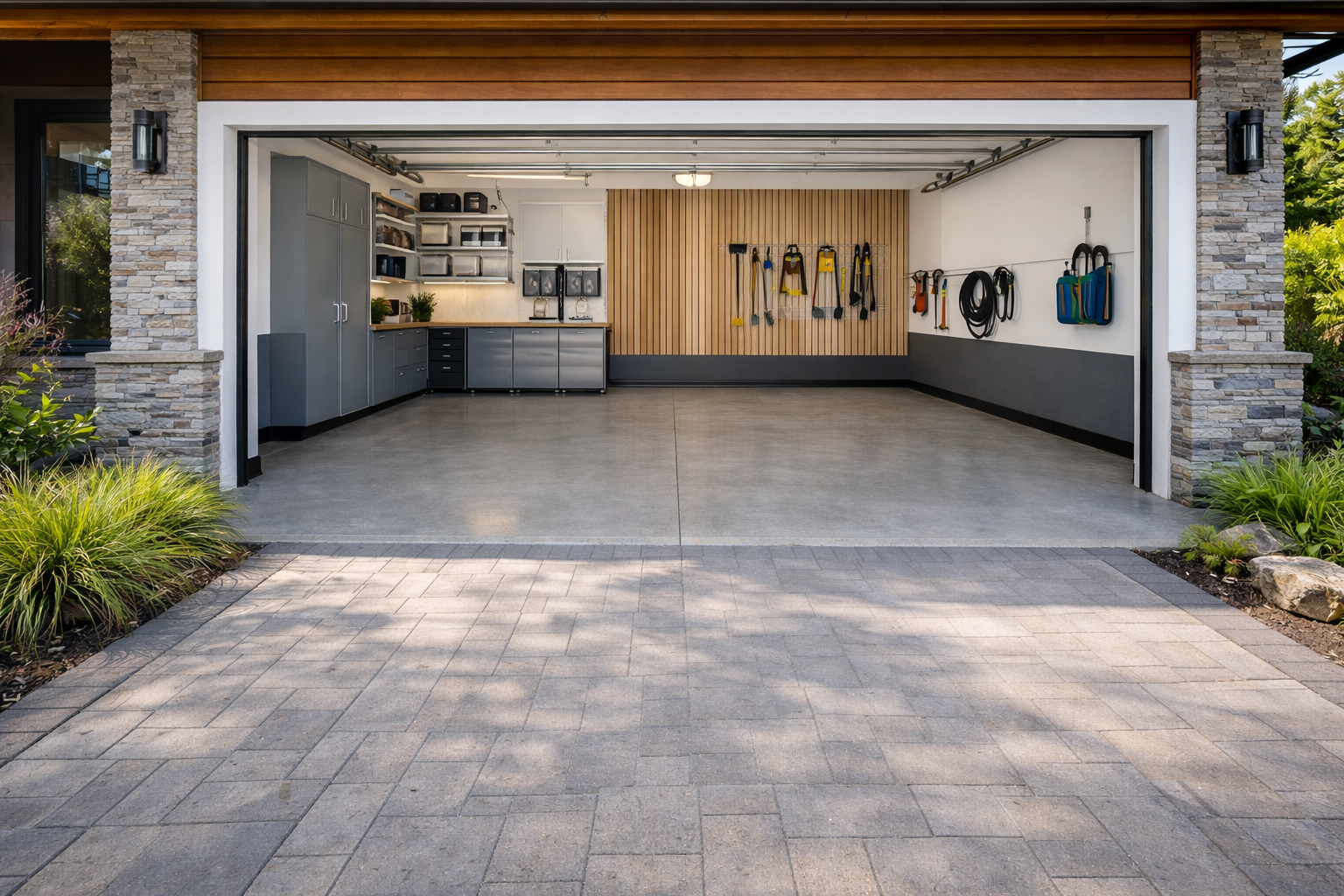
A clean, durable garage floor sets the tone for your entire home. Victoria Concrete designs and pours concrete garage floors in Victoria, BC that resist wear, drain properly, and stay easy to clean for years.
Whether you’re building new, replacing a failing slab, or upgrading with coatings and sealers, we deliver a tidy floor that works for daily life on the Island.
Quick Quote: Call 778-402-9747 or request your same‑day estimate below. Typical site visits within 24–48 hours in Greater Victoria.
Why choose Victoria Concrete for a garage slab
- Built right from the base up: We correct subgrade issues, compact properly, and design the slab to suit your vehicles and storage needs.
- Durable, low‑maintenance finishes: From smooth/trowel or light broom to densified or coated surfaces for easy cleaning.
- Drainage and slope solved: We set the right pitch toward the overhead door or trench drain—no puddles.
- Climate‑smart mixes: Concrete and curing methods tuned for Victoria’s damp winters and mild freeze‑thaw cycles.
- Professional project management: Clear scope, tidy site, and a workmanship warranty you can count on.

VCn - concrete blocks

Garage floor options and upgrades
Surface finish
- Smooth/trowel finish: Classic interior look that’s easy to sweep and mop.
- Light broom finish: Added traction near entries or on ramps.
- Machine trowel burnish (where suitable): Tighter surface for dust control.
Performance treatments
- Densifier/sealer: Reduces dusting and staining, improves cleanability.
- Penetrating sealer: Clear protection without changing the natural concrete appearance.
- Epoxy/urethane coating systems: High‑build roll coatings for chemical resistance and colour; optional decorative flakes and non‑slip media.
- Moisture mitigation primer: For coatings on green or moisture‑prone slabs.
Reinforcement and sub‑base
- Fibre‑reinforced mixes to help control micro‑cracking.
- Rebar or welded wire mesh designed to suit span and loads (ex: posts, lifts, heavy storage).
- 10–15 mm clean granular base placed and compacted to spec; geotextile where soils are soft.
- Vapour barrier (typically 10–15 mil poly) below the slab to reduce moisture transmission into the garage.
Drainage and slope
- Standard slope toward the door for wash‑downs and snow melt.
- Trench or point drains where the slab meets interior thresholds or mudrooms.
- Waterstop details at walls and transitions to protect framing.
Heating and utilities
- Radiant tubing rough‑in (on request).
- Conduit sleeves for future power, EV charger pedestals, or shop equipment.
- Saw‑cut layout planned for vehicle paths and column bases.
New Garage Slabs vs. Replacement
New construction
We coordinate with your builder or directly with you, confirm floor elevation, door threshold, and slope, then pour to a clean, uniform finish that’s coating‑ready if desired.
Replacement
If your slab is cracked, heaved, or settled, we remove and dispose of the old concrete, correct base and drainage, and pour a new slab to spec. We can also fix grade problems that push water toward doors or walls.
Our concrete garage floor process
- Assessment & fixed‑price quote
We evaluate access, soil, drainage, door thresholds, posts/lifts, and any drains. You’ll receive a clear quote with finish options, thickness, reinforcement, and timeline. - Design & prep
We confirm slab size and elevation, slope direction, saw‑cut joint plan, control/expansion joint locations, and any sleeves or radiant loops. - Demolition (if replacing)
Careful removal of the old slab and haul‑away. We isolate walls and protect adjacent finishes. - Sub‑base & vapour barrier
Place and compact a granular base to grade; install vapour barrier and perimeter isolation where required. - Forms & reinforcement
Set forms to final elevation and slope. Install fibre, mesh, or rebar per design; set drain bodies, sleeves, and anchor embeds. - Pour & finish
Place concrete, screed, and power‑trowel to your selected finish (smooth or light broom at the door apron). Edge and tool joints cleanly. - Saw‑cut joints
Cut control joints at the right time and spacing to help manage shrinkage and keep cracks straight and tidy. - Curing & protection
Curing compound or wet cure to achieve strength and reduce dusting. We set a light‑use schedule and protect fresh concrete as it gains strength. - Sealing or coating (optional)
After appropriate cure and moisture testing, we apply a densifier/sealer or a multi‑coat epoxy/urethane system with non‑slip media as specified. - Clean‑up & walkthrough
We leave the site tidy, review maintenance, and provide warranty details.
Typical specification
•
Thickness: 100–125 mm (4–5 in) for standard passenger vehicles;
150 mm (6 in) with upgraded reinforcement for heavy trucks, RVs, or lifts.
•
Concrete strength: Commonly 25–32 MPa mixes, adjusted for exposure and schedule.
•
Reinforcement: Fibre + mesh or rebar grid per design.
•
Vapour barrier: 10–15 mil poly under slab for moisture control.
•
Slope: ~1–2% toward the door or trench drain.
Designed for Victoria’s climate
- Moisture‑aware detailing: Vapour barriers and sealed penetrations help keep damp at bay in shoulder seasons.
- Freeze–thaw mindful: Proper air content where the apron or exterior pads are exposed; interior slabs are specified for strength and finish.
- Salt & chemical resistance: Optional coatings protect against winter road salt, oils, and household chemicals.
- Ventilation ready: Saw‑cut layout and slope reduce puddling and speed dry‑out after wash‑downs.
Epoxy and coating systems (optional upgrade)
When you want colour, extra durability, and easy clean‑up, a coating system is a smart add‑on:
- 100% solids epoxy base + polyaspartic/urethane topcoat for UV and chemical resistance.
- Decorative vinyl flake options (subtle to full‑broadcast) with non‑slip media.
- Quartz broadcast for high‑traction work bays.
- Moisture testing & primers ensure adhesion on new slabs.
- Line markings or parking guides available by request.
Coating timeline: new concrete typically needs adequate cure and moisture levels before coatings. We’ll propose a schedule and surface prep (grind/shot‑blast) to match your timeline.
Garage floor ideas that work
- Two‑car layout with centre drain for fast clean‑ups.
- Work bay with thicker slab and anchors for a future lift or heavy bench.
- Mudroom threshold with nosing and a slight lip to keep water in the garage.
- Integrated curb/short stem wall along perimeter to protect framing from splash.
- Apron upgrade outside the overhead door with matching finish and traction.
Care and maintenance
- Initial cure: Light foot traffic after ~24–48 hours; avoid vehicles for 7–10 days (weather‑dependent).
- Cleaning: Sweep or shop‑vac often; mop with mild detergent. Clean spills promptly.
- Reseal schedule: Penetrating sealers typically last 2–3 years; coatings follow manufacturer maintenance intervals.
- Winter tips: Use a stiff mat at the door to capture salt; avoid harsh de‑icers with ammonium sulphates/nitrates.
- Protective pads: Use rubber feet under stands or jacks; avoid point loads on green concrete.
Areas we serve
We pour garage floors across Greater Victoria: Victoria (Downtown, James Bay, Fairfield, Fernwood, Oaklands, Rockland), Saanich (Gordon Head, Royal Oak, Broadmead, Quadra, Tillicum), Oak Bay, Esquimalt, and Westshore communities (Langford, Colwood, View Royal). We also consider nearby Vancouver Island locations on request.
Get a fixed‑price quote
- Call 778-402-9747
- Or request a same‑day estimate using the form (photos + rough dimensions help us price faster).
- Bundle & save: Combine your garage floor with a driveway apron or walkway for efficient prep and perfectly matched finishes.
Frequently Asked Questions
Can you pour a garage slab in winter?
Yes—with seasonal mix adjustments, site heating where needed, and proper curing. We schedule around cold snaps.
Will the slab crack?
All concrete experiences some movement. Our base prep, reinforcement, and timely saw‑cuts help control where hairline cracks occur and keep the surface looking sharp.
Do I need a vapour barrier?
We strongly recommend it in our climate to reduce moisture transmission, help with coating adhesion, and limit musty odours.
What thickness should I choose?
Most homes are 100–125 mm (4–5 in). Choose 150 mm (6 in) with upgraded reinforcement for heavy trucks, RV pads, or lifts.
How much does a garage floor cost in Victoria?
Pricing depends on size, thickness, reinforcement, finish, access, drainage, and whether coatings are included. After a site visit, you’ll get a fixed‑price quote with no surprises.
Can you add drains or radiant heat?
Yes. We rough‑in trench or point drains and radiant tubing during prep so the pour is clean and integrated.